
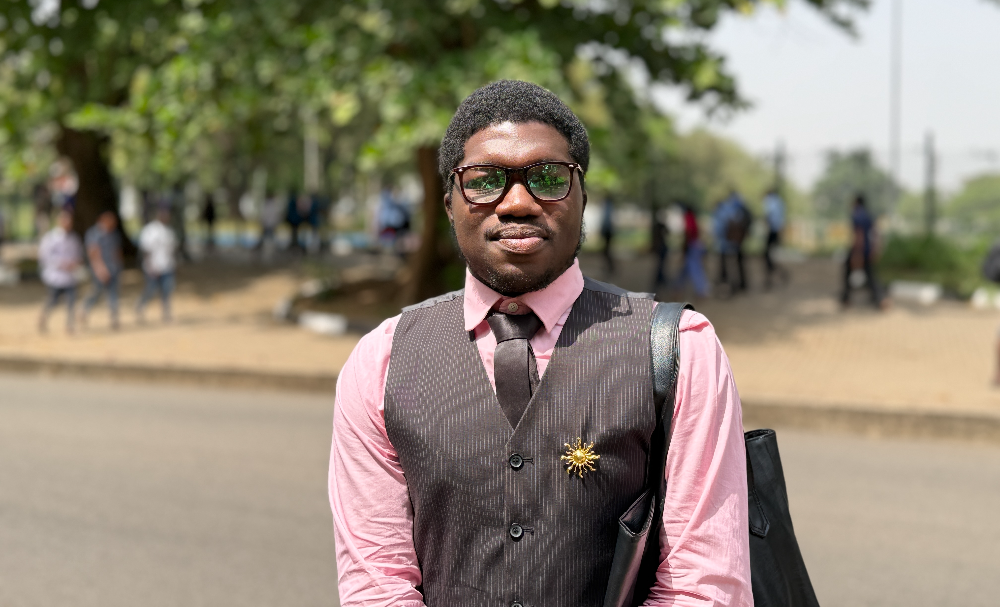
Kwame Agyekum Osei Bekyi's learning at KNUST has been shaped less by childhood expectations and more by hands-on experience.
Now a third-year Communication Design student at the Kwame Nkrumah University of Science and Technology (KNUST), Bekyi says practical projects have played a central role in helping him understand his strengths and interests.
Like many students, Bekyi once imagined a future in medicine. As he grew older, however, he realised that science did not hold his interest, while art increasingly did. With the support of his parents, he chose to pursue a creative path.
“I wanted to become a medical doctor when I was a kid,” he said. “But growing up, I realised that science was not something I was really passionate about. Art was what interested me, so I decided to dive deep into it.”
At KNUST, he said the Communication Design programme places strong emphasis on self-directed learning, with lecturers providing guidance while students take responsibility for developing their skills.
“The lecturers guide you and show you what to study, but you must put in your own effort,” he said.
Alongside core design courses, Bekyi said he has acquired additional skills such as videography and photo editing, which have expanded his creative toolkit.
One project in particular left a lasting impression: a group assignment in nature photography that took students to the Kumasi Zoo.
“We saw many animals and even watched the lions being fed,” he said. “It felt more like being a tourist than doing schoolwork. It was really a good day.”
Reflecting on his experience, Bekyi described the programme as one that encourages creative freedom while equipping students with practical, marketable skills.
“It gives you freedom as an artist,” he said. “You learn that you can grow, follow your passion and still make a living from it.”
He advised prospective students to look beyond status or income when choosing a course of study.
“Don’t just choose a course because of money or titles,” he said. “Do something you truly love.”
Bekyi’s experience illustrates how project-based learning can shape not only technical ability but also confidence and direction, reinforcing the value of practical training in creative education at KNUST.
By: Akosua Konadu Bandoh


